The data model
Append-only observations, derived daily baselines, human labels on top. Nothing is overwritten, so a number can always be walked back to the post it came from.
The machine
Six stages, one schedule, no unattended publishing. This is the whole thing, in the order it runs.

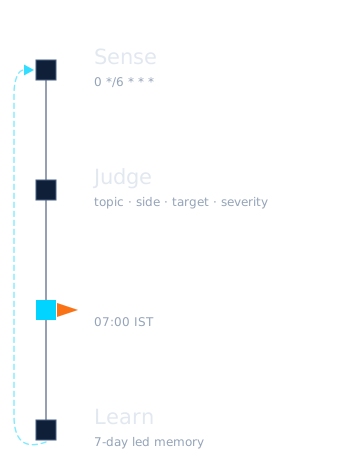
A fixed scan of the public conversation and the day’s press. Fixed beats frantic: a schedule you can audit, a recency gate that drops old virals back into the past where they belong, and a geography anchor that keeps another state’s noise out of your morning.
Every story is classified the same way — topic, side, target, severity — and rolled into daily baselines. That is what turns “it feels like this is growing” into a number with a date on it.
A frontier model judges what deserves an interruption, and a doctrine check runs on the result. A judgement that would have you defending a rival is regenerated once and then dropped. No alert beats a bad one.
Brief, alert, rebuttal, card, plan — to the leader’s phone, on the device the office already uses. Nothing is ever published by the machine.
Accepted is not delivered. We read the platform’s own receipts and tell the two apart, so “it was sent” is never mistaken for “they read it”.
A seven-day memory of what it led with, a recency floor under the day’s priorities, and a label store fed by what the office actually acted on.
The part nobody else has
Every arena has an incumbent, a rival opposition, and their allies. Every story is placed into one of three buckets — being used against us, an opening, or our own push — and the right action differs by bucket. Attack what is aimed at you. Widen what is aimed at the government. Sharpen what is yours and is not landing.
That placement is deterministic: the same inputs give the same answer, every time, and no model gets a vote. It is also why the system cannot hand you the most expensive mistake available in a three-cornered fight — defending the party you are trying to replace.
Your frame — who you are, who you are against, who is merely in the way — is configuration.
Append-only observations, derived daily baselines, human labels on top. Nothing is overwritten, so a number can always be walked back to the post it came from.
Frontier models from more than one provider, routed by task: strong models for judgement and for writing, light ones for classification — and plain code for everything that has to be right every time. Doctrine, guards, provenance and delivery are code, not prompting.
Spend ceilings per provider, kill switches on every scheduled surface, and an operations report every morning that leads with what failed rather than what worked.